Duct Velocity Calculator
On this page
Calculate
Overview
A duct velocity calculator determines the speed of air moving through HVAC ducts based on airflow and duct size. Duct velocity is a critical parameter in HVAC system design because it affects noise levels, friction losses, pressure drop, and energy efficiency.
HVAC engineers and technicians use duct velocity calculations when designing duct systems, selecting fans, and balancing airflow in residential and commercial buildings. If velocity is too high, it can cause noise, turbulence, and increased energy consumption. If it is too low, airflow may become inefficient and ducts may need to be oversized.
This calculator helps estimate air velocity for both round and rectangular ducts using common airflow units such as CFM, m³/h, and L/s.
How to Use This Calculator
Enter airflow — in m³/h or CFM.
Select duct shape — Round or Rectangular.
Enter dimensions — for Round, enter diameter (mm or in); for Rectangular, enter width and height (mm or in).
Click “Calculate” — get duct velocity and duct cross-sectional area.
Compare the calculated velocity against the recommended range for your duct type, then use the Velocity Pressure Calculator for the dynamic-pressure component.
Inputs & Outputs
Inputs
Outputs
Formula
Calculator Formula
Velocity (FPM) = Airflow (CFM) / Duct Area (ft²)
This calculator divides the volumetric airflow by the duct cross-sectional area to determine air velocity.
Duct Area Formulas
Round Duct:
Area (ft²) = π × (Diameter in inches / 12)² / 4
Rectangular Duct:
Area (ft²) = (Width in inches / 12) × (Height in inches / 12)
Metric Conversion
Velocity (m/s) = Velocity (FPM) × 0.00508
1 CFM = 1.699 m³/h
1 in = 25.4 mm
Variable Reference
| Variable | Meaning | Units |
|---|---|---|
| Airflow / Q | Volumetric airflow rate | CFM / m³/h |
| Duct Shape | Round or Rectangular | — |
| Diameter / D | Round duct inside diameter | in / mm |
| Width / W | Rectangular duct width | in / mm |
| Height / H | Rectangular duct height | in / mm |
| Area / A | Duct cross-sectional area | ft² / m² |
| Velocity / V | Air velocity (output) | FPM / m/s |
What is Duct Velocity
Duct velocity is the speed at which air travels through an HVAC duct. It is one of the most important parameters in duct system design because it directly affects noise levels, friction losses, pressure drop, and energy efficiency.
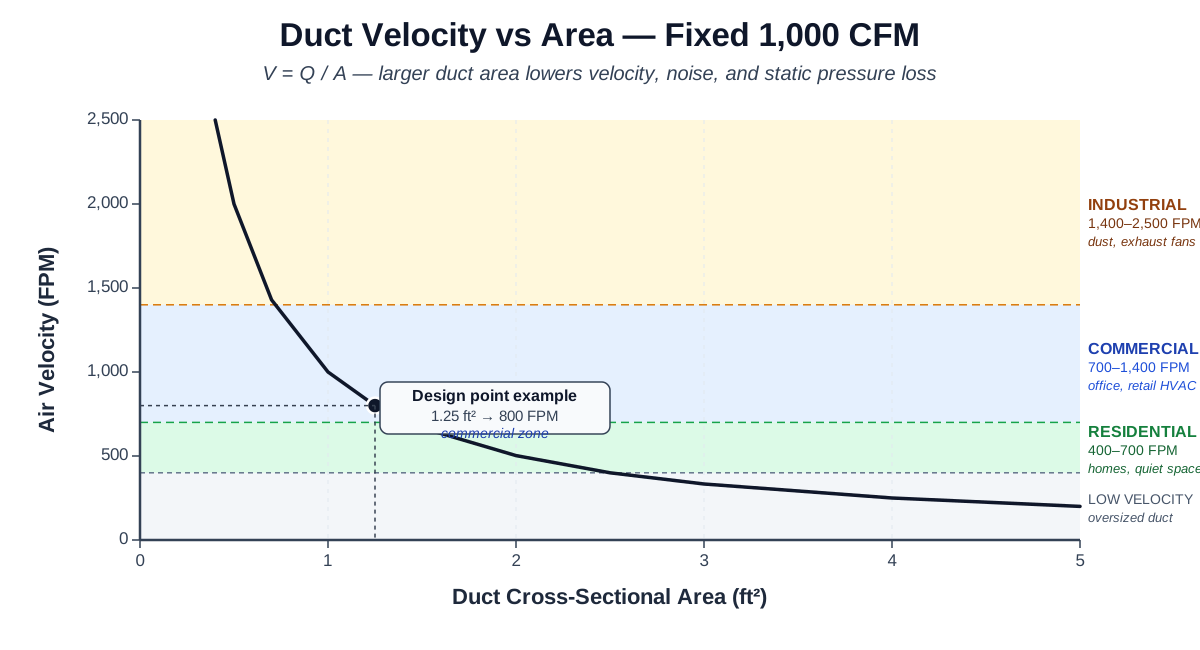
Duct velocity depends on two factors: the volumetric airflow rate and the duct cross-sectional area. Higher airflow through a given duct size increases velocity. Larger ducts carrying the same airflow reduce velocity. This fundamental relationship is the basis of all duct sizing decisions in HVAC engineering.
Why Duct Velocity Matters
Selecting the right duct velocity is a balance between several competing factors:
- Noise — higher velocity creates more aerodynamic noise, especially at grilles, registers, and fittings
- Friction losses — velocity increases friction exponentially, requiring more fan energy
- Pressure drop — higher velocity means greater total pressure loss across the duct system
- Duct size — lower velocity requires larger ducts, increasing material cost and space requirements
- Energy efficiency — the fan must overcome all pressure losses, so excessive velocity wastes energy
HVAC engineers must find the optimal velocity that balances noise, energy, and cost for each application.
Typical Duct Velocity Ranges
The following table shows recommended duct velocity ranges for common HVAC applications:
| Application | Velocity Range (FPM) | Velocity Range (m/s) |
|---|---|---|
| Residential supply ducts | 600–900 | 3.0–4.6 |
| Residential return ducts | 400–700 | 2.0–3.6 |
| Commercial supply ducts | 800–1500 | 4.1–7.6 |
| Low-noise systems (libraries, studios) | 400–700 | 2.0–3.6 |
| Industrial systems | 1500+ | 7.6+ |
These ranges are guidelines based on ASHRAE and SMACNA standards. Actual design velocity depends on specific project requirements including noise criteria, available space, and energy targets.
Engineering Applications
Duct velocity calculations are used across all areas of HVAC engineering:
HVAC Duct Design — Engineers calculate velocity to select appropriate duct sizes that balance noise, cost, and energy. The equal friction method and static regain method both rely on velocity as a key parameter.
Airflow Balancing — During commissioning, technicians measure duct velocity at test points to verify that designed airflow rates are being achieved. Velocity readings are taken with anemometers or pitot tubes.
Ventilation Systems — Exhaust and supply ventilation systems must maintain minimum velocities to ensure proper air distribution and contaminant removal.
Industrial Exhaust — Dust collection and fume extraction systems require minimum transport velocities to prevent particulate settling in ducts. These velocities are typically much higher than comfort HVAC systems.
Fan Selection — Fan performance is evaluated against the total system pressure drop, which depends on duct velocity throughout the system.
Key Facts
- Duct velocity directly affects noise levels in HVAC systems.
- High velocity increases friction losses and pressure drop exponentially.
- Velocity is calculated before velocity pressure in HVAC design workflows.
- Reducing duct size while maintaining airflow increases velocity proportionally.
- ASHRAE and SMACNA publish recommended velocity limits for different duct applications.
Applications
- HVAC duct system design and sizing.
- Airflow balancing and commissioning.
- Ventilation system analysis.
- Industrial exhaust and fume extraction systems.
- Fan selection and performance verification.
Example Calculation
Imperial Example (Round Duct)
Given:
- Airflow = 1000 CFM
- Duct Shape = Round
- Diameter = 12 inches
Step 1 — Calculate Duct Area:
Area = π × (12 / 12)² / 4
Area = 3.14159 × 1² / 4
Area = 0.785 ft²
Step 2 — Calculate Velocity:
Velocity = 1000 / 0.785
Velocity ≈ 1,274 FPM
Result: Velocity ≈ 1,274 FPM
This falls within the commercial duct velocity range (800–1500 FPM).
Imperial Example (Rectangular Duct)
Given:
- Airflow = 1000 CFM
- Duct Shape = Rectangular
- Width = 20 inches
- Height = 10 inches
Step 1 — Calculate Duct Area:
Area = (20 / 12) × (10 / 12)
Area = 1.667 × 0.833
Area ≈ 1.389 ft²
Step 2 — Calculate Velocity:
Velocity = 1000 / 1.389
Velocity ≈ 720 FPM
Result: Velocity ≈ 720 FPM
This falls within the residential supply duct velocity range (600–900 FPM).
Standards & References
- ASHRAE Fundamentals — duct design and airflow velocity guidelines
- SMACNA HVAC Duct Construction Standards — recommended velocity limits by application
- ACCA Manual D — residential duct design methodology
Limitations
- This calculator provides simplified velocity estimates based on airflow and duct size only.
- Real HVAC systems involve fittings, transitions, and duct roughness that affect actual velocity profiles.
- Results assume uniform airflow distribution across the duct cross-section.
- For detailed analysis, use professional duct design software that accounts for friction losses, fitting coefficients, and system effects.
Common Mistakes to Avoid
- Using wrong units — mixing metric and imperial dimensions.
- Using outside duct dimensions instead of inside dimensions.
- Ignoring duct shape — round and rectangular ducts have different area formulas.
- Forgetting to convert inches to feet before calculating area.
- Not accounting for duct liner thickness which reduces effective inside dimensions.
Frequently Asked Questions
What is duct velocity?
How do you calculate duct velocity?
What is a good duct velocity for HVAC systems?
Does smaller duct size increase velocity?
What happens if duct velocity is too high?
What happens if duct velocity is too low?
Is duct velocity the same as airflow?
How is duct velocity related to velocity pressure?
Frequently Used Together
Engineers often use these calculators in combination for complete project workflows:
Related Calculators
Explore similar calculators that might be useful for your project:
Free HVAC Quick Reference. Formulas & Checks.
Airflow, loads, refrigerant & duct checks — one printable page for the job site.
- Key formulas for airflow, load, refrigerant charge & duct sizing
- Quick sanity checks for the most common HVAC design errors
- Printable one-pager for field use and design review
No spam. Unsubscribe any time.